
70 mm2 Shielded HV Cable Safety Orange 450/700 V
Terms and Conditions
Orders Dispatched Within 24 hours - Excluding Weekends and Bank Holidays.


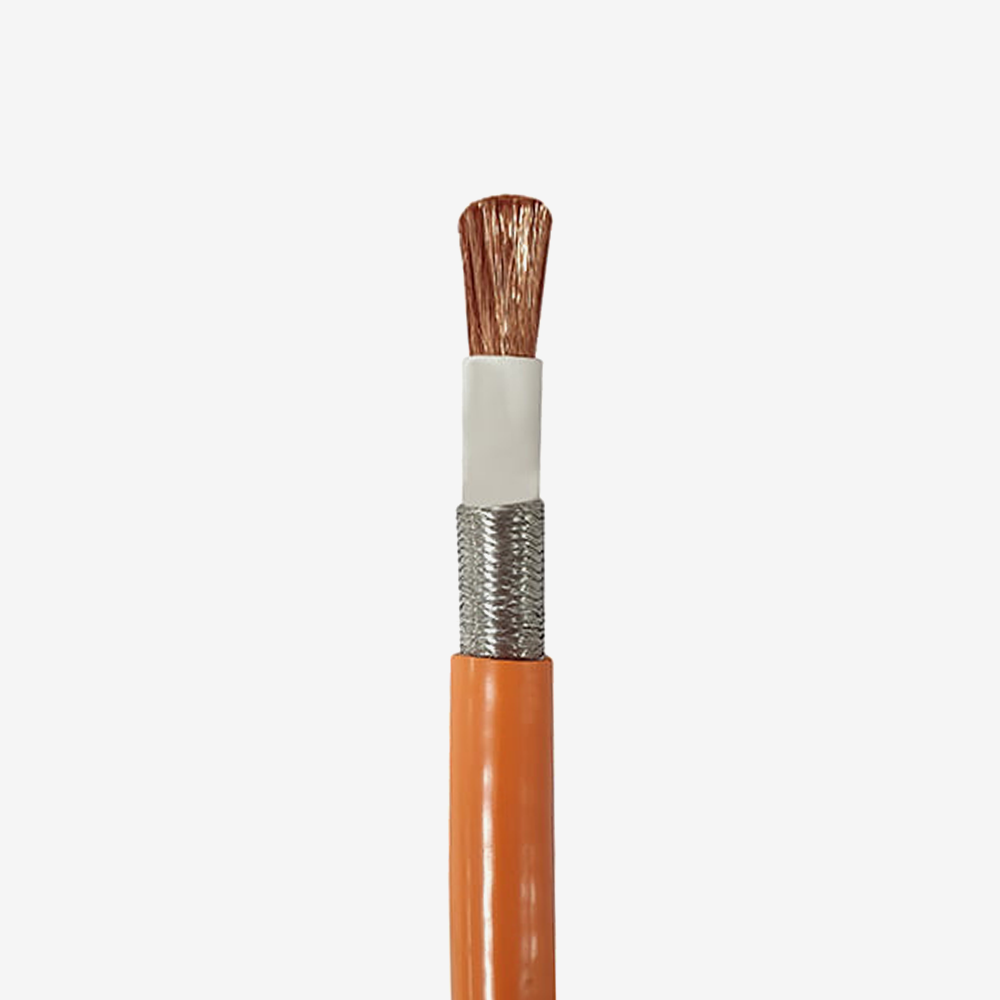
Shielded 70 mm2 high voltage cable in safety orange, rated 450 V AC and 700 V DC. This is the size most conversions use for the main pack to inverter run, where the peak current is high enough that 50 mm2 starts to cost you voltage. Sold by the metre and cut as one continuous length.
High voltage cable in a conversion has three jobs beyond carrying current. It has to be obviously high voltage to anyone who opens the vehicle, which is what the orange sheath is for. It has to contain the electrical noise a motor inverter makes, which is the job of the tinned copper braid under the outer layer, and without it that noise finds its way into the CAN bus and the low voltage electronics. And it has to survive an engine bay for the life of the vehicle, which is why the conductor is 2,214 fine strands rather than a few thick ones: it stays flexible, tolerates vibration and can actually be routed around a tight installation.
Key specifications
| Manufacturer part | HVC70MM |
|---|---|
| Conductor size | 70 mm2 |
| Conductor design | Stranded bare copper, 2,214 strands of 0.21 mm |
| Conductor resistance | Maximum 0.259 milliohm per metre at 20 degrees C |
| Voltage rating | 450 V AC, 700 V DC |
| Test voltage | 2.5 kV for 5 minutes |
| Screening | Tinned copper braid, high coverage |
| Insulation | Dual layer PVC over the screen |
| Core diameter | 15.8 mm |
| Outer diameter | 19.6 mm |
| Minimum bend radius | 6 times the cable diameter, about 118 mm |
| Operating temperature | Minus 20 to plus 70 degrees C |
| Standard | DIN EN 13602 |
| Sold by | The metre, supplied as one continuous length |
Features
- Tinned copper braid keeps inverter noise inside the cable instead of in your CAN bus and instrumentation
- 2,214 fine strands rather than a few coarse ones, so it routes around a real installation and tolerates vibration
- Safety orange sheath identifies the cable as high voltage to anyone working on the vehicle, which is a requirement and not a style choice
- Dual insulated over the screen, so a chafed outer sheath does not immediately mean an exposed conductor
- 0.259 milliohm per metre, so a 3 metre run costs you well under a volt at 300 A
- Cut as one continuous length to the quantity ordered, so a run is a run rather than a joint in the middle
Compatibility
Terminate it with copper lugs crimped with a hydraulic crimper, then seal the joint with adhesive lined heat shrink. For a connectorised run, our 70 mm2 HV connectors take this cable directly.
Two numbers to design around before you order: the outer diameter of 19.6 mm when sizing glands, grommets and conduit, and the minimum bend radius of about 118 mm, which is what usually decides whether a route is possible at all.
We stock the same cable in seven sizes, so a build can use one cable type throughout and change only the gauge:
| 1 mm2 | 60 V AC / 600 V DC, unshielded |
|---|---|
| 4 mm2 | 450 V AC / 700 V DC, shielded |
| 6 mm2 | 450 V AC / 700 V DC, shielded |
| 16 mm2 | 450 V AC / 700 V DC, shielded |
| 35 mm2 | 450 V AC / 700 V DC, shielded |
| 50 mm2 | 450 V AC / 700 V DC, shielded |
| 70 mm2 | 450 V AC / 700 V DC, shielded, this cable |
Size the conductor for the continuous current the run will carry and the length of the run, not for the peak alone. If you are unsure, tell us the pack voltage, the motor and the run length and we will work it through with you.
In the box
- Cable, cut to the number of metres ordered
Lugs, heat shrink, glands and connectors are ordered separately.
Downloads
The technical datasheet for this cable is in the Documents tab above.